
ICE has sent us an important signal with its 3.5 MWh pilot plan for energy storage in Colorado de Abangares. This project emerges as a complementary measure to address growing demand, the electrification of the economy, and the need to maintain a reliable and competitive electricity supply for the country.
If the operator of the national electric system is incorporating storage to address demand, reliability, and power quality challenges, companies should be asking themselves the same question at the scale of their own operations.
Energy security can no longer be understood simply as “having electricity available.” For a company, energy security means production continuity, voltage stability, equipment protection, demand control, and the ability to respond to brief outages, fluctuations, or blackouts. In sophisticated industrial processes, an interruption of only a few seconds can cause production losses, equipment damage, reprocessing, raw material waste, and operational delays.
Energy storage to respond to electrical failures
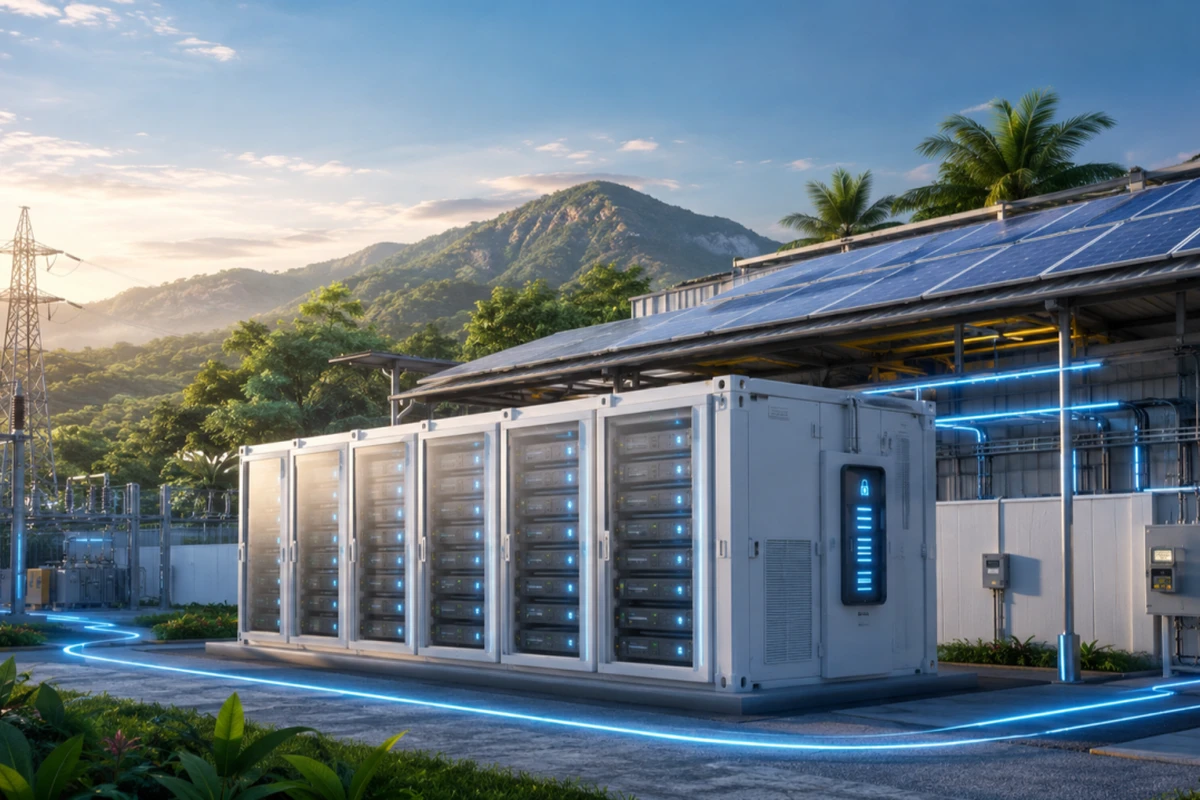
A well-designed storage system can respond in milliseconds, support critical loads, reduce demand peaks, smooth out electrical fluctuations, and operate as a natural complement to solar photovoltaic energy.
There is also a relevant economic component. In industries with time-of-use rates, storage makes it possible to shift consumption to more convenient periods, reduce demand peaks, and, when combined with solar systems, make better use of self-generated energy.
I believe this will be one of the most important changes in business energy management in the coming years. Just as ICE is beginning to incorporate storage to strengthen the national system, companies can invest in their own energy security to protect their operations, improve their competitiveness, and prepare for an increasingly demanding electrical environment.
In reality, this change has already begun.
The big question is: when will your company take the step?